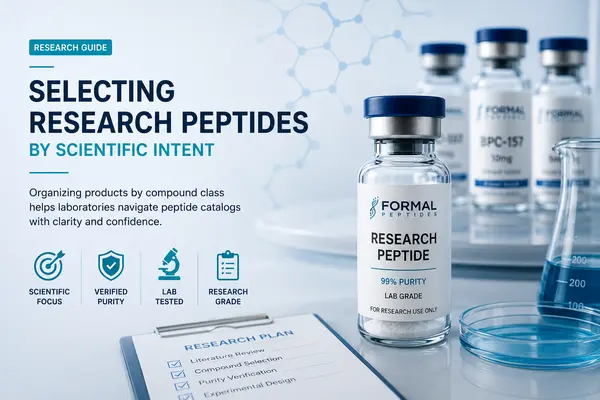
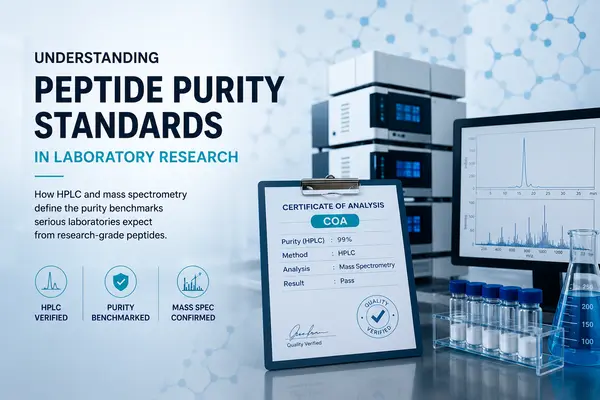
Research-grade peptides demand verifiable purity at or above 99% for most in-vitro applications. Independent third-party testing using HPLC and mass spectrometry remains the gold standard for confirming identity and purity before compounds enter a qualified workflow.
At Formal Peptides, every batch is tested and traceable. Certificates of Analysis are linked to each vial via QR code, giving laboratories instant access to batch-level documentation for audit readiness.
Why purity matters
Impurity profiles can alter experimental outcomes, compromise reproducibility, and introduce variables that undermine peer-reviewed research. Laboratories should always verify COA data against incoming inventory before use.
Best practices
Store lyophilized peptides at recommended temperatures, reconstitute with appropriate solvents, and document batch numbers in your lab notebook for full traceability.